


Comfort in Hospital HVAC Installations: Much More Than Temperature

Environmental comfort in hospital buildings is one of the most complex and demanding aspects of HVAC engineering. Unlike other tertiary-sector buildings, where comfort is usually assessed mainly by measuring variables such as temperature, relative humidity, and occupants’ perception, hospitals must simultaneously address requirements related to wellbeing, clinical safety, infection control, and the energy and operational efficiency of the facility.
A modern hospital operates 24 hours a day, all year round. Its spaces accommodate patients with different physiological conditions, healthcare staff exposed to high levels of physical and mental activity, visitors with temporary stays, and highly sensitive medical equipment. All of this requires the design of air-conditioning systems capable of providing stable and safe environmental conditions, adapted to each specific use.
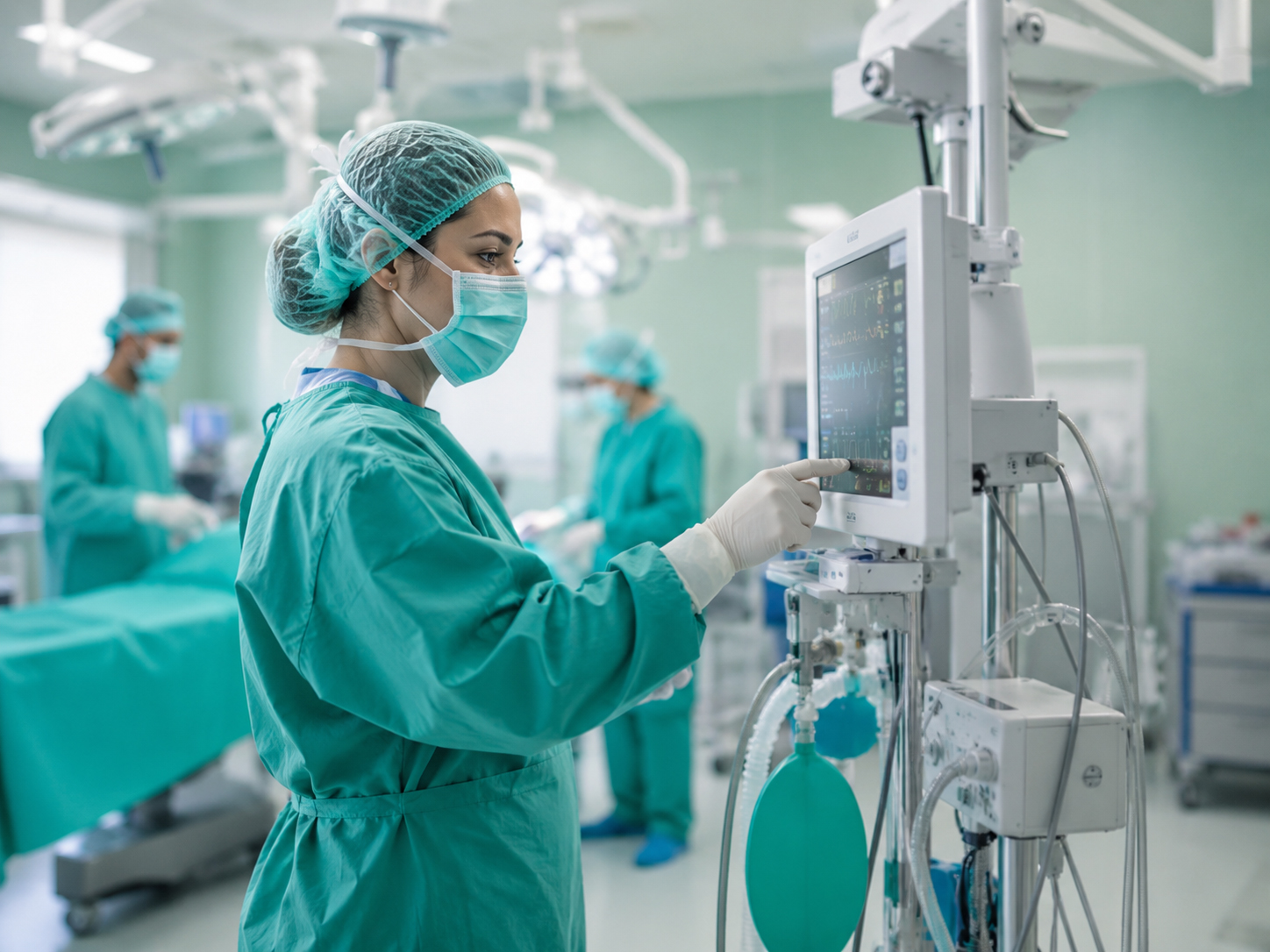
This concept of compartmentalization means that a hospital should not be viewed as a single system, but rather as a set of systems, whether or not they share the same generation system, each with highly differentiated technical requirements.
The perception of comfort in a hospital cannot be understood solely as a feeling of comfort or as a space where “pleasant” conditions are maintained. In many cases, it is directly related to patient recovery, stress reduction, improved performance among healthcare staff, and the reduction of clinical risks associated with healthcare-associated infections.
Concept of thermal comfort
ISO 7730 defines thermal comfort as the satisfaction a person experiences with the thermal environment that surrounds them. This concept implies that comfort does not depend exclusively on air temperature, but on multiple variables that interact simultaneously. The standard itself already establishes that the number of dissatisfied occupants, expressed as a percentage, will never be zero. RITE considers it acceptable if it does not reach 10%, and this is not an easy target to achieve.
The key environmental variables include dry-bulb temperature, mean radiant temperature, air velocity and relative humidity. Personal factors must also be added, such as metabolic activity and the level of insulation provided by clothing.
In a hospital, these variables involve additional complexity. While a bedridden patient may have extremely low metabolic activity, MET 0.8 or less, a nurse attending several patients or a surgeon during an operation may develop significantly higher metabolic levels. Likewise, a patient’s hospital clothing provides much lower thermal insulation than that of a healthcare professional equipped with a gown, uniform and personal protective equipment.
And, of course, Indoor Air Quality (IAQ) is critical in these types of environments, where occupancy levels are often high in certain areas and where the risks of contagion are significant. It is a crucial factor which, although it rarely forms part of the everyday concept of comfort, must rank among the primary design requirements for this type of installation.
For this reason, hospital HVAC design must consider the specific needs of each space and each type of occupant.

Importance of comfort for patient recovery
Numerous studies have shown that the indoor environment directly influences the clinical progress of patients.
Excessively high temperatures can increase the feeling of fatigue, encourage dehydration and increase physiological stress. Conversely, temperatures that are too low generate discomfort, increase metabolic consumption and create a feeling of unease.
Proper control of relative humidity also plays a fundamental role. Excessively low humidity levels promote dryness of the mucous membranes and respiratory discomfort, while high humidity levels increase the risk of microbiological proliferation and impair the perception of comfort.
Environmental stability is equally important. Continuous fluctuations in temperature, humidity or air velocity are often perceived negatively by patients with reduced mobility who remain in the same location for long periods.
Consequently, the HVAC system must provide stable and homogeneous conditions, minimizing thermal gradients and avoiding uncomfortable drafts.
Comfort and productivity of healthcare staff
Healthcare staff are among the main users of a hospital building. Doctors, nurses, technicians and auxiliary personnel carry out activities with high physical and cognitive demands.
The scientific literature has shown that thermally inadequate environments reduce concentration capacity, increase fatigue and raise the likelihood of human error. In critical areas such as operating rooms, intensive care units or laboratories, a decrease in performance can have significant consequences for the quality of care.
For this reason, the design of HVAC installations must seek a balance between the needs of healthcare staff and the specific requirements of each clinical process.
In certain areas, this balance is particularly complex. Operating rooms are the clearest example. The requirements of these rooms are highly specific and restrictive; in fact, each hospital has its own way of operating, going far beyond current regulations and standards. No one knows their needs better than they do.
Indoor air quality
Indoor air quality is one of the fundamental pillars of hospital comfort, if not the first. Air perceived as clean, fresh and free of odors has a positive influence on both patients and workers.
However, in hospitals, air quality goes beyond subjective perception. Its control forms part of the strategies for preventing healthcare-associated infections. Adequate ventilation makes it possible to dilute chemical and biological contaminants, as well as suspended particles.
Hospital systems usually incorporate high-efficiency filtration, using HEPA and ULPA absolute filters in critical areas and progressive filtration combinations in general zones.
The proper integration of these filtration systems within Air Handling Units (AHUs) is decisive for ensuring the overall performance of the installation. Specialized manufacturers such as KEYTER develop solutions specifically aimed at hospital applications, where indoor air quality, operational reliability and energy efficiency must coexist under the highest standards of requirement.
The correct selection of filters, ventilation airflows and differential pressure configurations is an essential element for ensuring both comfort and safety.
Differential pressure control
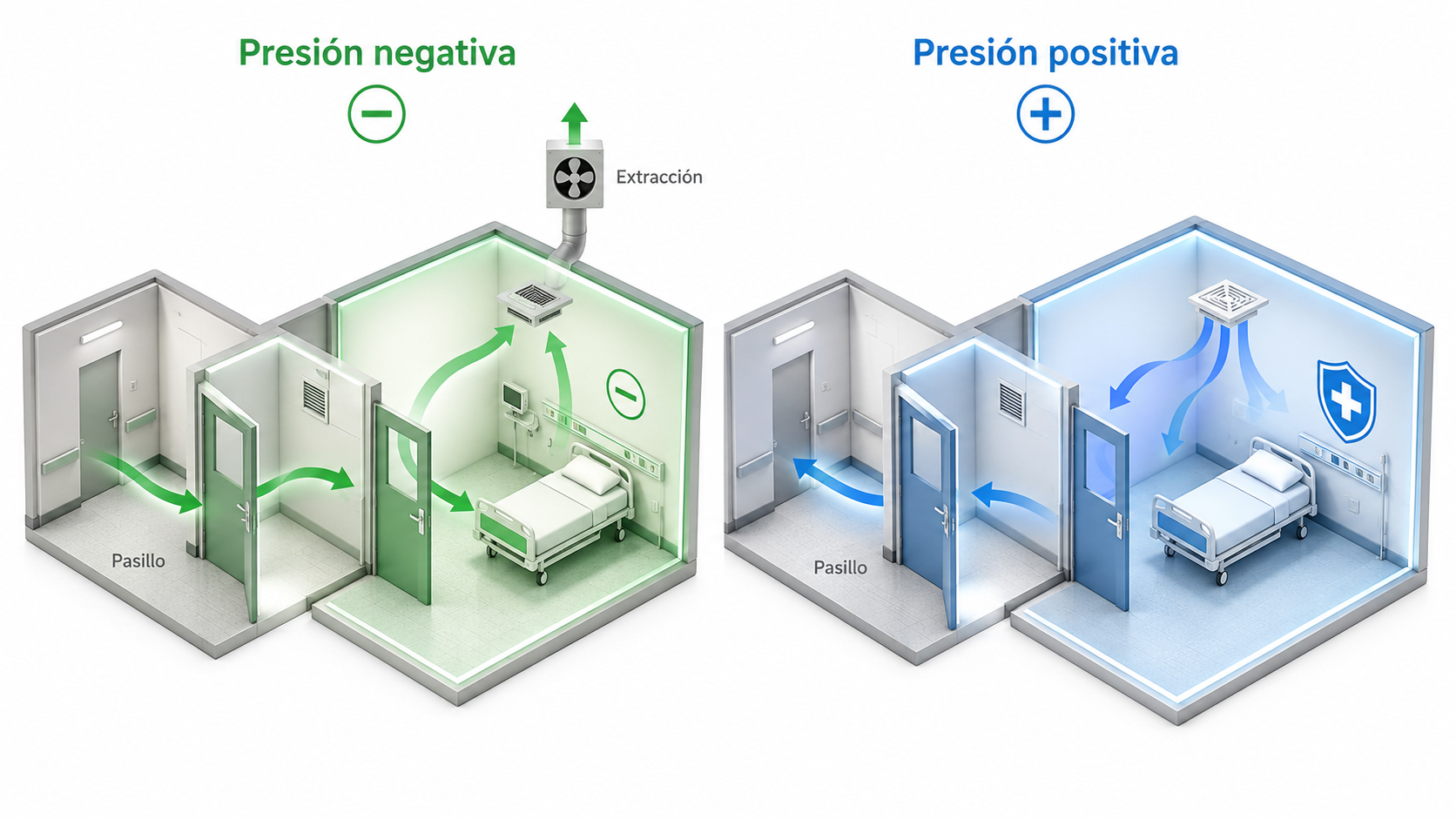
One of the most characteristic aspects of hospital HVAC installations is the use of differential pressures between rooms. The way airflows move between rooms determines how contaminants move through the building.
Infectious isolation rooms are usually maintained under negative pressure to prevent the spread of pathogens to adjacent spaces. This is achieved through room exhaust to the outside, without forgetting everything mentioned above regarding comfort conditions.
By contrast, operating rooms, cleanrooms and certain pharmaceutical preparation areas are maintained under positive pressure to prevent the entry of contaminants. These rooms “defend” themselves by preventing air from entering them, thereby maintaining appropriate hygiene conditions.
Stable maintenance of these pressure differences requires highly precise control systems. The existence of UNE standards, such as UNE 100713, makes this clear and, as noted above, hospitals often go well beyond them with their own strategies.
In addition to fulfilling healthcare functions, these strategies help maintain consistent environmental quality within each room.
Air distribution and perception of comfort
Air distribution has a decisive influence on the perception of comfort. Even when temperature and humidity are within suitable ranges, incorrect distribution can generate dissatisfaction.
Drafts are one of the most frequent causes of complaints in air-conditioned buildings. In hospitals, bedridden patients are especially sensitive to this phenomenon because of their limited mobility. For this reason, the location of diffusers, returns and terminal elements must be designed to avoid direct impact on occupied zones.
CFD simulations (Computational Fluid Dynamics) have become highly relevant in modern hospital design, making it possible to analyze flow patterns, thermal distribution and contaminant transport before construction.
The difficulty of these simulations increases when furniture comes into play. Changing scenarios affect the simulations, which makes their importance during the design and execution phases essential.
Relative humidity and well-being
Relative humidity affects both thermal sensation and respiratory health. Excessively low values promote dryness of the mucous membranes, eye irritation and respiratory discomfort. Conversely, high humidity levels create a sensation of stuffiness and can encourage microbiological proliferation. This aspect must not only be controlled in the environment; AHUs and ventilation systems must also control this microbiological proliferation. Control of biofilm on air-handling coils is a critical aspect and one that is rarely well resolved in maintenance.
In hospitals, it is particularly important to maintain humidity levels compatible with clinical safety and occupant well-being. Humidity control usually requires advanced humidification and dehumidification strategies integrated into the air handling units.
Energy efficiency and comfort
Traditionally, it was considered that improving comfort inevitably implied an increase in energy consumption. However, technological evolution has shown that both objectives can be achieved simultaneously.
The use of heat recovery units, variable frequency drives, advanced control systems, smart sensors and energy management strategies makes it possible to optimize the operation of installations without compromising environmental quality.
The technological evolution of HVAC equipment now makes it possible to achieve efficiency levels that were unthinkable barely a decade ago. High-efficiency air-to-water heat pumps, modulating hydronic systems and air handling units with advanced energy recovery, such as those developed by KEYTER for tertiary-sector and hospital applications, enable significant reductions in energy consumption while maintaining the demanding environmental conditions required in these buildings.
Hospitals have very high energy consumption due to their continuous operation and strict ventilation requirements. Therefore, any improvement in energy efficiency has a significant economic and environmental impact. The key lies in designing systems capable of providing the required level of comfort at all times while avoiding unnecessary consumption.
In this area, the use of waste energy becomes a key player. Simply thinking about kitchens, laundries and similar services gives those of us who operate in the HVAC world an immediate view of usable kWh for domestic hot water (DHW) production, which is undoubtedly part of the building comfort concept.
Digitalization and continuous monitoring
Modern BMS systems make it possible to monitor temperatures, humidity levels, differential pressures, air quality, filtration status and energy consumption in real time.
Digitalization is transforming the management of hospital comfort.
This transformation does not affect only control systems. HVAC equipment itself increasingly incorporates greater monitoring, communication and operational analysis capabilities. The integration of HVAC equipment, BMS systems and supervision platforms makes it possible to optimize the building’s energy performance and anticipate maintenance needs, improving both installation availability and user comfort.
The integration of distributed sensors provides a detailed view of the environmental behavior of each area of the hospital. Technologies based on artificial intelligence are also beginning to be used to anticipate thermal demands, optimize ventilation and detect operational deviations before they affect comfort or safety. This predictive approach represents one of the main trends in modern hospital engineering.
There is still a long road ahead. The analysis of these data and the improvements they point to mean that the life of the installations is dynamic and adaptable to the needs of the hospital facility.
Conclusions
Comfort in hospital HVAC installations is a complex discipline in which engineering, medicine, microbiology and energy efficiency converge, and all these disciplines must be coordinated during the design, installation, maintenance and inspection phases. A lack of coordination in this ecosystem results in an installation that will become obsolete and, before long, fall outside the standards for which it was created.
It is not simply a matter of maintaining a given temperature. True hospital comfort means providing a stable, healthy and safe environmental setting that promotes patient recovery, optimizes healthcare staff performance and contributes to infection prevention.
Temperature, humidity, air quality, airflow distribution, differential pressures and filtration are all part of an integrated system whose ultimate mission is to guarantee the best possible conditions for healthcare activity.
The hospitals of the future will increasingly depend on intelligent, highly monitored and energy-efficient HVAC systems, capable of continuously adapting environmental conditions to the changing needs of patients, professionals and clinical processes.
Regulatory evolution, increasing demands regarding indoor air quality and decarbonization targets are driving a profound transformation of hospital installations. In this context, collaboration between engineering firms, healthcare facilities and specialized manufacturers such as KEYTER is essential for developing solutions capable of combining comfort, clinical safety, energy efficiency and long-term sustainability.
In this context, HVAC engineering ceases to be a simple auxiliary service and becomes a strategic element of modern healthcare infrastructure, with a direct influence on care quality, patient safety and the sustainability of hospital facilities.
Hydronic systems in hospitals
From a global hospital engineering perspective, the experience accumulated over decades of designing and operating healthcare facilities shows that systems based on heat pumps for centralized production of chilled water, hot water and domestic hot water (DHW), hydraulic distribution and centralized air treatment through Air Handling Units (AHUs) remain the most suitable solution for the vast majority of modern hospitals. This is precisely the philosophy adopted by specialized manufacturers such as KEYTER, whose experience in hospital and healthcare projects has made it possible to develop solutions specifically aimed at meeting the requirements of comfort, indoor air quality, energy efficiency and reliability demanded by this type of installation.
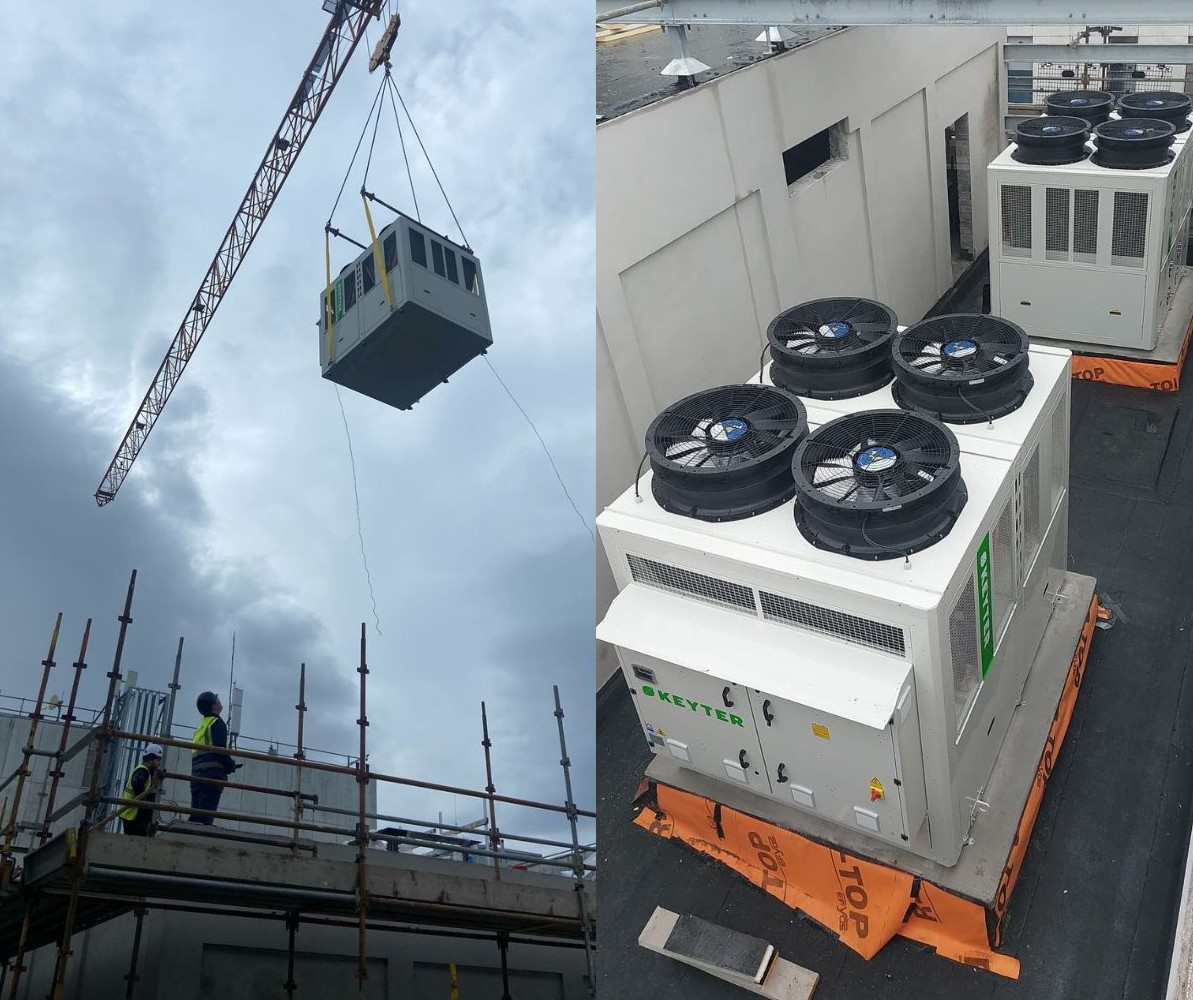
To respond to the different climatic and operational requirements of healthcare buildings, KEYTER has developed different ranges of air-to-water heat pumps adapted to European Ecodesign requirements, covering everything from mild climates to cold climates and high thermal and cooling production capacities. This technological diversity makes it possible to select the most appropriate solution for each hospital project, optimizing both energy performance and continuity of service.
The main reason lies in their ability to simultaneously meet the demanding requirements for comfort, air quality, infection control, energy efficiency, operational flexibility and reliability that characterize these types of buildings. Compared with other decentralized solutions, hydronic systems make it possible to decouple thermal production from energy distribution, enabling much more precise control of environmental conditions in each functional area of the hospital.
Water chillers are the heart of chilled-water production. These units offer high energy performance, strong modulation capacity and outstanding operational reliability, all of which are fundamental in buildings whose activity cannot stop under any circumstances. The use of water as the energy transfer fluid also makes it possible to distribute large thermal capacities with smaller pipe sections and with significantly higher efficiency than systems based exclusively on direct expansion (DX).
For their part, the AHUs designed by KEYTER for the specific needs of these installations play an essential role by handling the comprehensive treatment of outdoor and recirculated air. Through them, it is possible to precisely control the temperature, humidity, filtration, ventilation and indoor air quality required in each hospital space. They also facilitate the incorporation of advanced energy recovery systems, contributing significantly to the reduction of the building’s overall energy consumption. KEYTER’s experience in the healthcare sector ranges from adaptation and modernization projects for existing installations to participation in new hospitals designed under high energy efficiency and sustainability criteria. These include its participation in the San Juan de Dios Hospital in Zaragoza, considered one of the first hospitals in Spain conceived under an integrated energy sustainability strategy.
Another determining aspect is the capacity for zoning. A hospital contains areas with very different environmental needs: operating rooms, intensive care units, inpatient rooms, laboratories, outpatient clinics and administrative areas. The combination of water networks and AHUs makes it possible to adapt operating conditions to each specific use without compromising the performance of the rest of the installation.
Finally, these systems offer a high capacity for long-term growth, adaptation and maintenance. The constant evolution of care-related needs requires hospitals to be easily modified and expanded. Installations based on chillers, hydraulic circuits and AHUs provide the flexibility needed to address these changes while maintaining the highest standards of comfort, safety and efficiency, which is why they continue to be the predominant reference technology in top-tier hospitals internationally.
More articles
Interested in other (technical) knowledge articles? Keep yourself up to date and read them all
