


Aerothermal Energy and Heat Pumps: the Efficient Solution for Replacing Fossil-Fuel Boilers

Aerothermal energy is a technology that is transforming the way we condition buildings and produce domestic hot water. It is efficient, sustainable, and increasingly used in hotels, hospitals, educational facilities, sports centres, nursing homes, student residences, industrial facilities, and residential communities.
In this context, KEYTER, as a manufacturer specialised in the design and development of HVAC+R solutions, has been working for years on aerothermal heat pumps aimed at tertiary, industrial, and collective residential applications. Its accumulated experience in air-to-water units, chillers, rooftop units, and air treatment solutions makes it possible to offer technologies adapted to the real needs of each installation, with a focus on energy efficiency, reliability, and emissions reduction.
What Is Aerothermal Energy?
Aerothermal energy is a 100% renewable system that provides heating, cooling, and domestic hot water production. Unlike traditional boilers, it does not burn fossil fuels such as natural gas, LPG, diesel, or coal. Instead, it extracts heat from the outdoor air and transfers it into the building.
Aerothermal systems can generate up to six times more useful energy than the electrical energy they consume, resulting in significant energy and cost savings, as well as a substantial reduction in CO₂ emissions.
KEYTER heat pumps are based precisely on this principle: using the energy available in outdoor air and converting it into heating, cooling, or domestic hot water with reduced electrical consumption. This capability makes aerothermal technology one of the most effective solutions for replacing fossil-fuel-based systems and moving towards more efficient, decarbonised buildings.
How Does It Work?
Although the technical process is complex, its operation can be explained simply:
- It captures energy from the ambient air.
- It concentrates this energy through an internal circuit.
- It transfers it to the heating, cooling, or domestic hot water system.
Is It Reliable in Cold Climates?
Yes. Aerothermal technology is widely tested and well established in countries with particularly harsh winters, such as Sweden, Germany, and Canada, where temperatures can remain far below zero for long periods. In these demanding environments, it has proven to operate reliably and efficiently, adapting to adverse climate conditions without compromising indoor comfort.
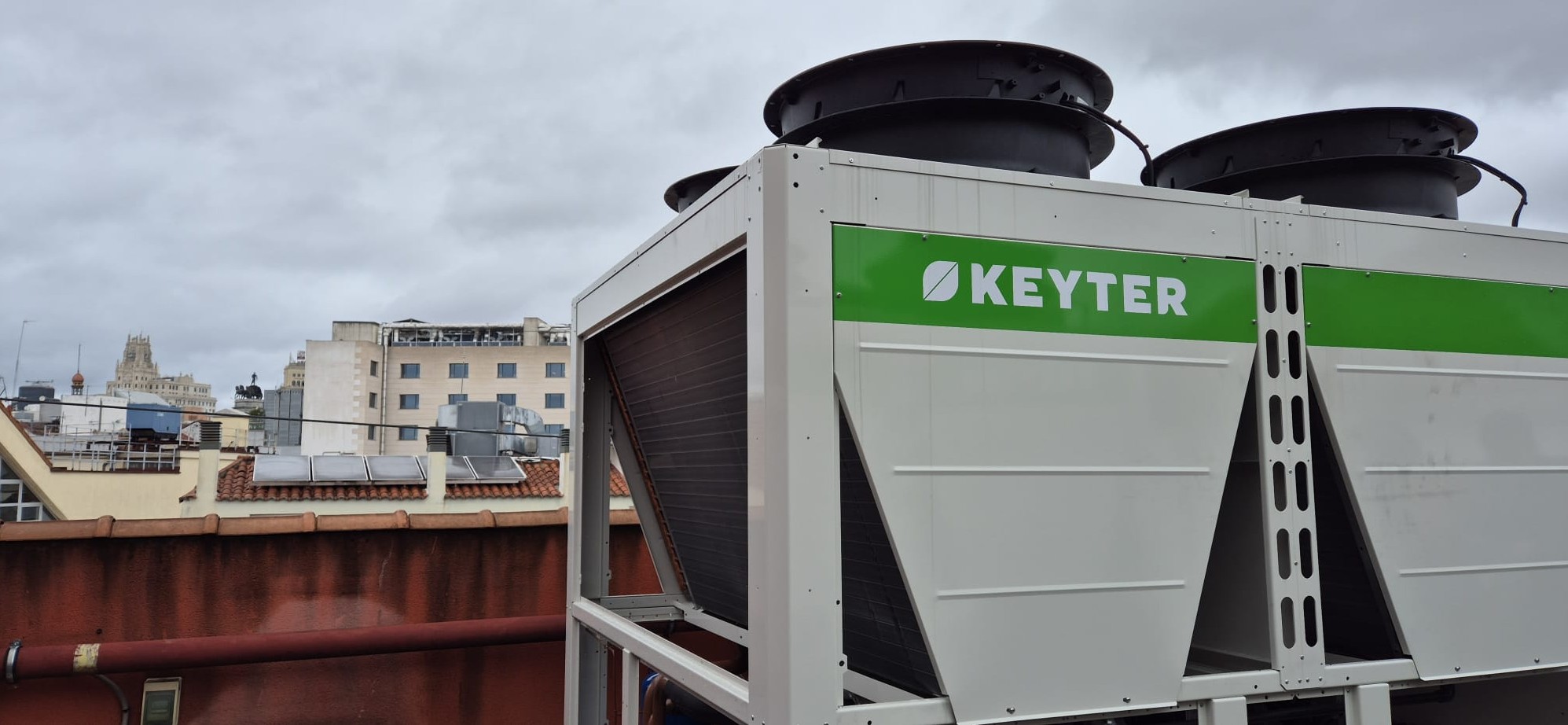
This capability is largely due to the technological advances of modern equipment, which includes intelligent control systems and high-performance compressors capable of extracting energy from outdoor air even under extreme cold conditions. In addition, modern units are designed to optimise efficiency at all times, modulating operation according to the building’s actual thermal demand.
As a result, aerothermal systems not only ensure that heating requirements are met in winter, but they do so with lower energy consumption compared with traditional systems. This makes them a robust, reliable, and sustainable solution, suitable for both mild climates and more severe environments.
Correct equipment selection is essential. KEYTER develops heat pump ranges adapted to different climate profiles and operating requirements, enabling the selection of specific solutions for mild, moderate, or cold climates, as well as for installations with continuous or variable thermal demand.
What Savings Can It Generate?
In general terms, energy savings can reach up to 60% compared with traditional systems.
From a financial perspective, a residential community can save between 30% and 60% after the payback period, depending on the size of the building and the previous system. In tertiary-sector projects — excluding subsidies, except for the discount associated with Energy Saving Certificates, or CAE — savings of up to 15% can be achieved during the six-year financing period.
Once the investment has been amortised, savings can exceed 45%, confirming the profitability, stability, and sustainability of this type of solution.
What Happens to the Existing Boiler?
There are two possible options: replacing the old boiler with a new aerothermal-based HVAC system, allowing the installation to become 100% renewable; or keeping the boiler as a backup for occasional periods of high thermal demand.
This hybrid solution is particularly suitable when there are electrical power limitations in the building, as it allows the available resources to be optimised without compromising the overall performance of the system. It also enables a gradual transition towards more sustainable energy models, reducing emissions and improving the energy efficiency of the installation.
This is especially relevant in energy renovation projects, where full replacement of the thermal generation system may require a phased transition. KEYTER’s aerothermal solutions can be integrated into hybrid architectures, maintaining existing backup systems where necessary and prioritising heat pump operation as the main high-efficiency energy source.
The aerothermal system stands out for its high efficiency, as it uses energy from outdoor air to generate heating, cooling, and domestic hot water, thereby contributing to a significant reduction in energy consumption and medium- to long-term operating costs.
This ensures comfort at all times, guaranteeing that thermal needs are covered even during peak demand periods, while enabling an orderly, flexible, and disruption-free energy transition for the user or residential community.
Is It Necessary to Lift the Floor or Replace the Radiators?
In most cases, aerothermal systems can be perfectly adapted to existing thermal emitters, such as radiators or fan coil units, which greatly facilitates their integration into installations that are already in operation. This avoids the need for complex construction work or significant interventions in the home or building.
While it is true that systems such as underfloor heating can maximise the efficiency of aerothermal technology, they are not essential for correct operation. Current equipment is designed to work with different types of emitters, adjusting performance to provide maximum comfort even in pre-existing installations.
Furthermore, this adaptability helps reduce both initial costs and execution times, making the transition towards a more efficient and sustainable system much simpler and more accessible.
Ultimately, it is a flexible solution that can be easily integrated into most scenarios, without the need for complex renovation work or major additional investments.
What Components Does a Heat Pump Have and Where Are They Installed?
Outdoor Unit
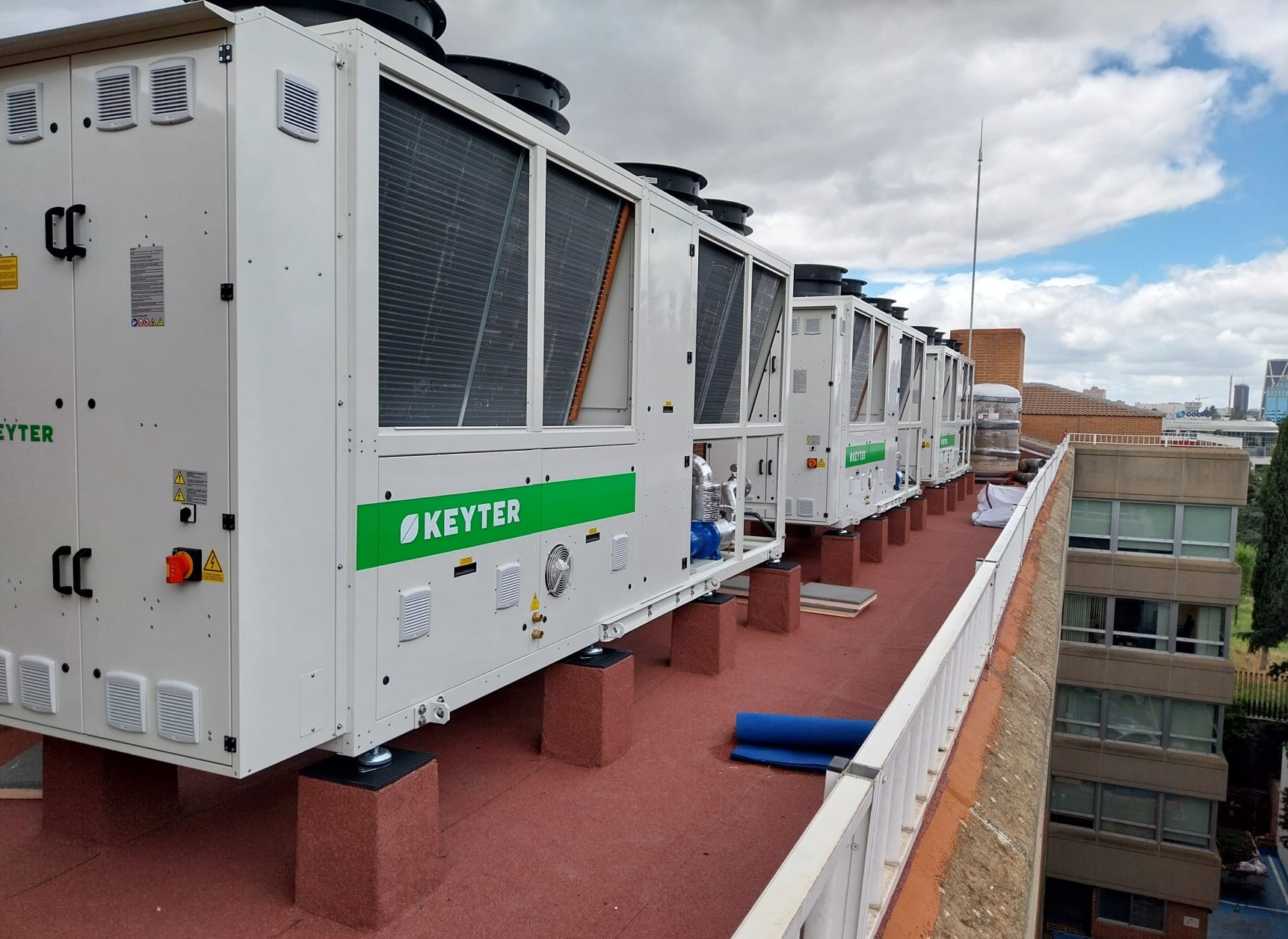
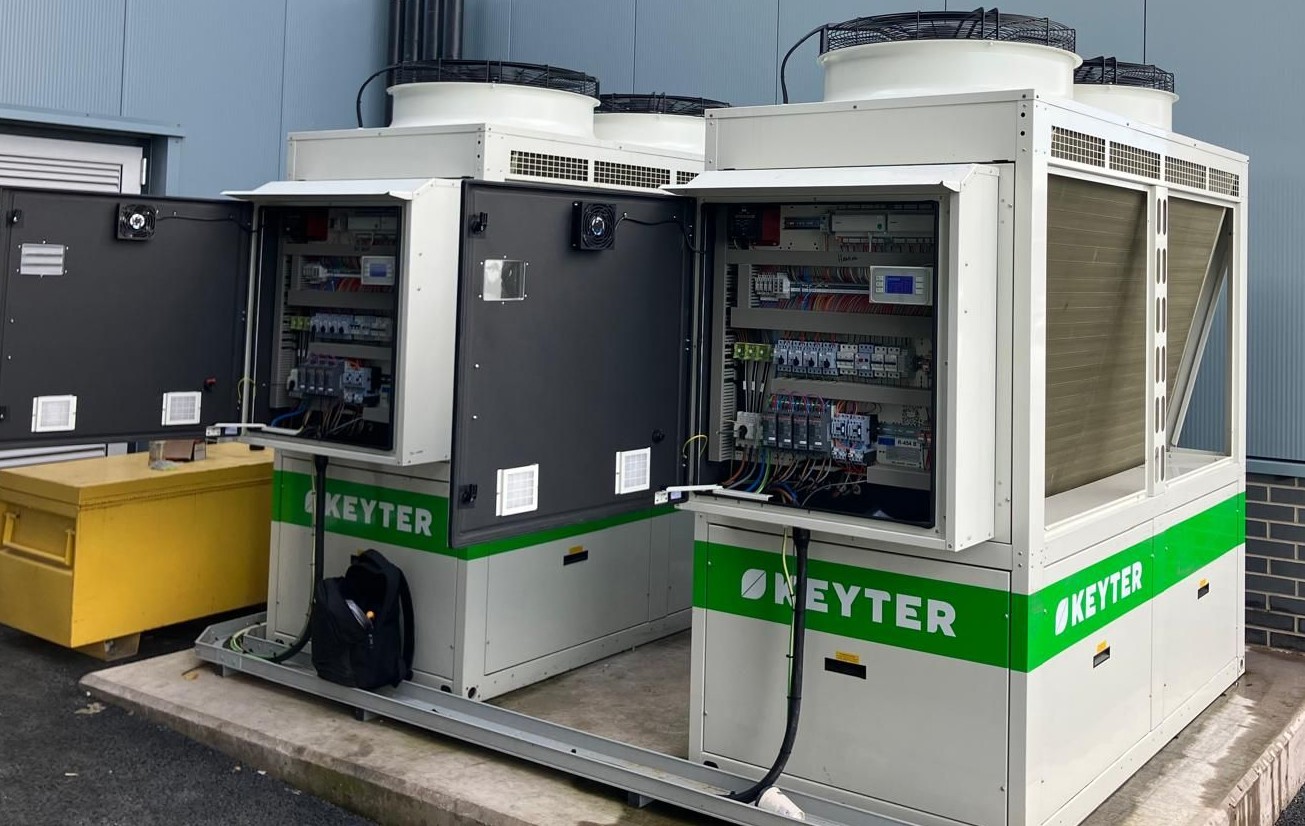
This is the unit that exchanges energy with the ambient air. It is usually installed on the flat roof of the building or, in some cases, on pitched roofs that include a flat area prepared for equipment installation.
This unit is key to capturing thermal energy from ambient air and supplying the system.
In the case of KEYTER equipment, the outdoor unit design combines efficient heat exchange with ambient air, capacity modulation, and the robustness required to operate in high-demand installations, such as tertiary buildings, sports facilities, hospitals, hotels, and residential communities.
Buffer Tanks and Domestic Hot Water Storage Tanks
These are installed in the technical room, normally where the old boiler was located. The buffer tank helps stabilise the system and improve efficiency, while the storage tank ensures the availability of domestic hot water.
Thermal Emitters
These are located in the occupied areas of the building and may be of different types:
Radiators
Very common in traditional installations. In most cases, they can continue to be used directly.
Fan Coil Units
Ideal where a cooling system was already installed. They may be floor-mounted, wall-mounted, ducted, or cassette-type units.
Radiant Heating and Cooling Floors
Where already installed, the heat pump manages them perfectly for both heating and cooling.
It is not necessary to replace these elements, which enables a fast, cost-effective transition without loss of comfort.
Subsidies, Rebates, Tax Savings, and Energy Saving Certificates
At ATuAire by Iberdrola, they have a Subsidy Observatory that analyses all available aid schemes from the quotation stage, including national, autonomous-region, regional, and local incentives.
They calculate the potential savings for each project and manage the subsidy application process so that the client does not have to deal with complex administrative procedures.
In addition, where applicable tax deductions exist, they provide support to ensure these financial benefits are used correctly.
Energy Saving Certificates, known in Spain as CAE, are direct investment incentives that reward energy savings. For each energy efficiency measure implemented, the client receives financial compensation.
ATuAire by Iberdrola is part of the Iberdrola Group, an obligated party within the CAE system, which makes it possible to offer particularly competitive conditions and reduce the initial investment from the outset.
Does It Improve the Building’s Energy Rating?
Yes. By reducing consumption and emissions, the heat pump improves the building’s energy rating, which can increase the value of the property and facilitate access to public aid schemes.
The Value of the Collaboration Between ATuAire by Iberdrola and KEYTER
The transition to aerothermal technology requires the right combination of energy analysis, technical design, equipment selection, installation, and financial support throughout the project.
Within this framework, the collaboration between ATuAire by Iberdrola and KEYTER brings together Iberdrola’s expertise in electrification, financing, energy management, and Energy Saving Certificates with KEYTER’s technological capability as a manufacturer of high-efficiency heat pumps and HVAC+R solutions.
This combination facilitates the development of turnkey projects capable of reducing consumption, lowering emissions, and improving comfort in buildings and facilities through solutions designed to meet each client’s specific needs.
A Safe Bet for the Future?
Yes. Since it operates on electricity, the heat pump reduces dependence on fossil fuels and on the geopolitical fluctuations that affect gas prices. In addition, it enables the integration of solar photovoltaic energy, strengthening the building’s energy independence.
If your building still depends on a gas or diesel boiler, now is the time to consider switching to efficient, reliable aerothermal solutions adapted to each installation, backed by the energy expertise of ATuAire by Iberdrola and the HVAC+R technology developed by KEYTER.


More articles
Interested in other (technical) knowledge articles? Keep yourself up to date and read them all
